I still remember the first time I truly paid attention to symptoms of RSV in older adults. What started as what looked like a harmless cold in an older relative slowly turned into days of extreme fatigue, breathing trouble, and confusion that did not make sense for “just a virus.” RSV in older adults rarely announces itself loudly at the start, and that quiet beginning is exactly why it deserves serious attention.
Respiratory Syncytial Virus, commonly called RSV, affects people of all ages, but older adults often experience it differently. Symptoms typically appear four to six days after exposure. While it may begin with mild cold-like signs, it can progress quickly in adults over 65 or in those with chronic health conditions. Understanding the progression helps you respond early instead of reacting late.
What Are The Early Symptoms Of RSV In Seniors?
The early symptoms of RSV in older adults often feel frustratingly ordinary. Many people mistake them for seasonal allergies or a routine cold, which delays action. Congestion or a runny or stuffy nose is usually one of the first signs, often paired with sneezing or a scratchy throat that feels minor at first.
A dry, nagging cough and low-grade fever may follow, along with fatigue that feels heavier than expected. Older adults frequently describe a general run-down feeling, headaches, and a noticeable decrease in appetite. These symptoms rarely arrive all at once. Instead, they appear in phases, which makes RSV easy to underestimate during the first few days.
How Do Symptoms Of RSV In Seniors Become More Severe?
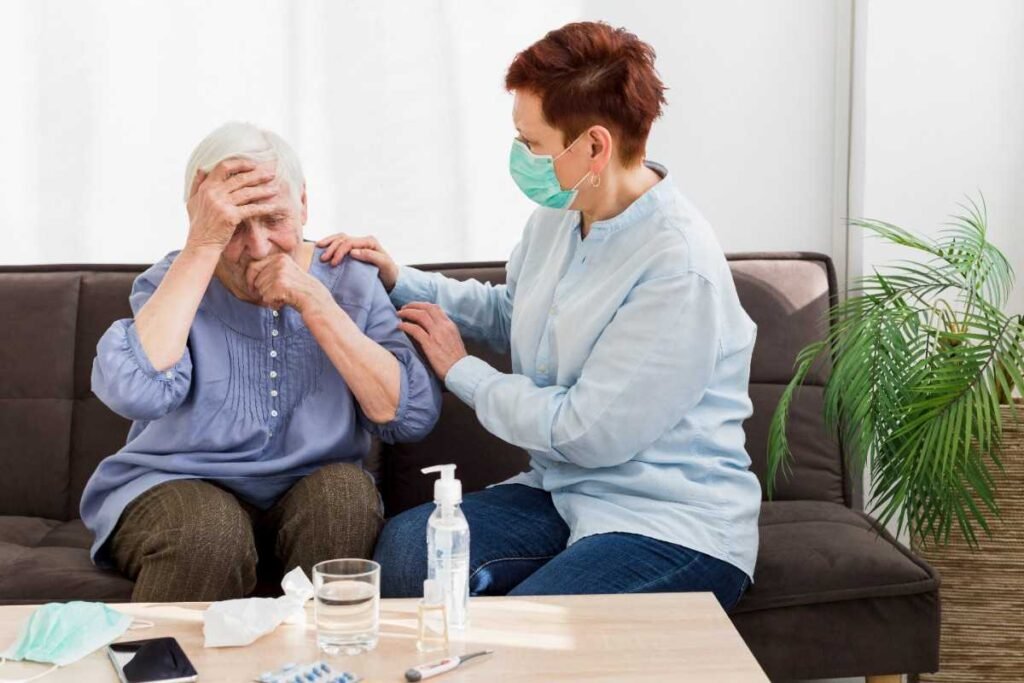
As RSV moves deeper into the respiratory tract, symptoms of RSV in older adults can escalate in ways that feel sudden and alarming.
Breathing Trouble
As RSV moves into the lungs, symptoms of RSV in older adults can worsen quickly. Shortness of breath may occur during simple activities, and breathing can feel tight or exhausting.
Cough and Wheezing
A harsher cough often develops, sometimes with thick mucus. Wheezing may sound like a high-pitched whistle when breathing out.
Fever and Confusion
Fever may rise above 100.4°F, along with rapid breathing or a fast heartbeat. Sudden confusion is common in older adults and needs prompt attention.
When Are Symptoms Of RSV In Older Adults An Emergency?
Knowing when symptoms of RSV in seniors cross into emergency territory can be life-saving.

Cyanosis
A bluish or grayish tint around the lips, skin, or nail beds is a serious warning sign that the body isn’t getting enough oxygen.
Extreme Exhaustion
If an older adult struggles with simple tasks like standing, brushing hair, or talking, urgent medical attention is needed.
Chest Pain or Pressure
Sharp chest pain or pressure, especially when breathing deeply or coughing, is concerning and requires immediate care.
Dehydration
Signs of dehydration, including dizziness, dry mouth, or reduced urination, signal that the body is under stress and needs immediate care.
Why Do Symptoms Of RSV In Older Adults Carry Higher Risks?
Symptoms of RSV in older adults do not exist in isolation. RSV can significantly worsen underlying health conditions that many seniors already manage daily. For individuals with COPD or asthma, RSV may trigger severe flare-ups that require hospitalization or advanced respiratory support.
Heart health is also closely connected. RSV infections have been linked to worsening congestive heart failure and increased risks of atrial fibrillation, heart attack, or stroke within 90 days of infection. This makes RSV more than a respiratory illness. It becomes a full-body stressor that can destabilize existing medical conditions if not managed promptly.
How To Manage Symptoms Of RSV In Older People At Home
Managing symptoms of RSV in older adults at home requires close monitoring. Watch for changes in breathing, energy, hydration, and appetite. If breathing becomes labored or noisy, reassess rather than wait.
Encourage rest and fluids, even with low appetite, and maintain a calm, comfortable environment. A pulse oximeter can help track oxygen levels, but it shouldn’t replace observation. Any decline, confusion, or breathing issues should prompt a call to a healthcare provider immediately.
How Long Do Symptoms Of RSV In Older Adults Usually Last?

The duration of symptoms of RSV in older adults varies depending on overall health and how quickly care begins. Mild cases may improve within one to two weeks, but fatigue and cough can linger longer than expected. Many older adults report that energy levels return gradually rather than all at once.
For those with chronic conditions, recovery may take additional time. If symptoms persist beyond two weeks or worsen instead of improving, reassessment is important. Prolonged symptoms can signal complications such as pneumonia or worsening of underlying respiratory or heart conditions.
Frequently Asked Questions
Q.1 Can symptoms of RSV in older adults start mild and then worsen quickly?
Yes, this is very common. Symptoms of RSV in older adults often begin as mild cold-like signs and then intensify over several days. Because fever may be absent or low, the illness can feel deceptively mild at first. Monitoring trends, not just individual symptoms, helps catch worsening early.
Q.2 Are symptoms of RSV in older adults different from flu or COVID?
Symptoms of RSV in older adults often overlap with flu and COVID, but RSV tends to cause earlier breathing difficulty and wheezing. Flu usually comes on suddenly with higher fever, while RSV progresses more gradually. COVID varies widely. Testing and medical guidance are important when symptoms look similar.
Q.3 Can healthy older adults still have severe symptoms of RSV?
Yes. Even older adults without chronic illness can experience severe symptoms of RSV. Age alone increases risk. While chronic conditions raise the likelihood of complications, healthy seniors should still take symptoms seriously and seek care if breathing, energy, or mental clarity changes.
Q.4 How can symptoms of RSV in older adults be prevented?
Prevention focuses on hand hygiene, avoiding close contact with sick individuals, and discussing vaccination with a healthcare provider. The CDC recommends RSV vaccines for all adults ages 75 and older and for adults ages 50 to 74 who are at increased risk for severe disease.
Final Thoughts On Symptoms Of RSV In Older Adults
If there is one thing I have learned, it is that symptoms of RSV in older adults deserve respect, not dismissal. RSV does not always arrive dramatically, but it can leave a serious impact if overlooked. Paying attention to subtle changes, acting early, and trusting your instincts can make a meaningful difference in outcomes.
A little awareness goes a long way in senior health. When you know what to watch for and when to act, you are better prepared to protect yourself or someone you care about during RSV season.
Disclaimer: This is for informational purposes only. For medical advice or diagnosis, consult a professional.