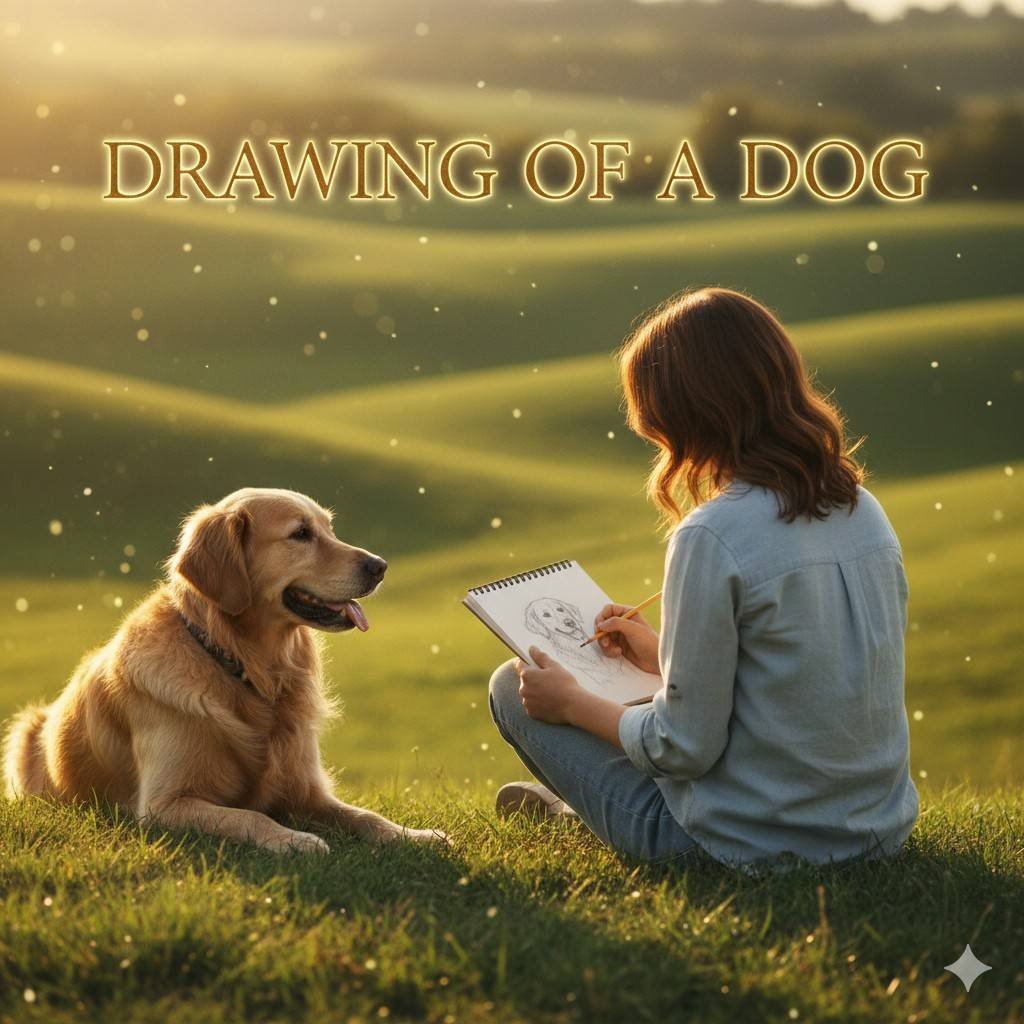
Drawing a dog is a timeless artistic subject, full of character, emotion, and variation. Whether you’re sketching a playful puppy, a loyal family dog, or a realistic canine portrait, understanding structure, proportions, fur texture, and expression will elevate your work significantly. In this guide, I’ll walk you through different approaches used by artists and illustrate how to master drawing dogs in your own style. The beauty of drawing dogs is that it appeals to both beginners and advanced illustrators alike, you can create something simple and charming or something deeply realistic. With practice and familiarity, each drawing becomes an opportunity to refine technique and deepen artistic intuition.
Understanding Different Styles of a Dog Drawing
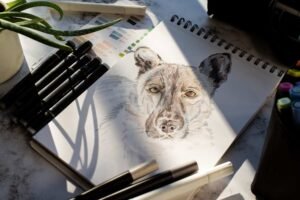
Before you begin, it’s helpful to explore the variety of visual directions a dog drawing can take. Some artists prefer minimalist outlines that capture canine gesture with minimal strokes, while others gravitate toward detailed realism where each strand of fur and glint in the eye is carefully expressed. You might experiment with cartoon styles that emphasize emotion and exaggeration, or try expressive line drawings that focus on movement and flow rather than detail.
Tools and Materials You Need for a Good Dog Drawing
This section will feature one of the three permitted bullet-point areas for clarity:
- Traditional Drawing Tools: HB pencil for outlines, 2B–6B for shading, kneaded eraser for highlights
- Digital Drawing Tools: tablet or iPad, stylus/Apple Pencil, apps like Procreate or Adobe Fresco
- Optional Enhancements: blending stumps, textured paper, charcoal pencils for deep contrast
Having the right tools doesn’t make the artist, but it absolutely supports a smoother drawing experience.
Step-by-Step: How to Create a Drawing of a Dog
Begin by loosely sketching foundational shapes—a circle for the head, an oval or rectangle for the torso, and basic cylinders for the legs. Once proportions are established, refine the form of the snout, neck, paws, and tail, slowly evolving geometric outlines into an organic canine silhouette. When developing the face, be mindful of eye placement, muzzle curvature, and ear size, these are key identifiers of both breed and personality. Gradually add fur direction, tonal shading, and light placement so the drawing begins to feel dimensional and lifelike.
Drawing Dogs of Different Breeds
Different breeds offer unique structural challenges—bulldogs have stocky mass and heavy jowls, while greyhounds embody sleek athletic lines. Golden retrievers require attention to layered fluffy fur, while pugs demand focus on their expressive wrinkles and curved facial planes. When drawing a breed, spend time studying real images of that dog; breed-specific anatomy matters immensely in achieving authenticity.
| Breed Type | Key Features to Capture | Notes |
| Golden Retriever | Fluffy, layered fur, soft expression | Light, airy shading |
| Bulldog | Thick folds, heavy jaw | Deeper shadowing |
| Greyhound | Lean, slender body | Emphasis on bone structure |
| Pug | Wrinkles, round head | Textured face shading |
| German Shepherd | Long muzzle, pointed ears | Dramatic contrast |
| Shih Tzu | Long straight hair | Flowing lines |
Tips from Professional Pet Portrait Artists

Experienced artists often emphasize observing real dogs or reference imagery—not merely to copy what is seen, but to study the subtle essence of behavior and presence. Focus on the dog’s attitude: the tilt of the head, alertness of ears, tension or relaxation in posture. Fur direction should always be drawn according to growth patterns, and tonal values should be layered gradually to avoid flattening features. By viewing your drawing with frequent pauses, you notice imbalance and can correct subtle proportion issues early.
Using a Reference Image When Drawing
Drawing from imagination is valuable, but for realism, reference material is a cornerstone. Using photographs helps reinforce anatomical accuracy, while drawing from life—if you have a cooperative pet—improves reaction speed and gesture sketching. Slow observation trains the eye: you begin to notice how light hits the eyelids, how whiskers protrude from muzzle pads, or how fur clumps in certain areas during motion.
Common Mistakes Beginners Make
Second bullet-point section for readability:
- Drawing fur as straight, uniform lines rather than layered directional strokes
- Pressing too hard early in the sketch, making errors harder to correct
- Misplacing the eyes or exaggerating their size, resulting in cartoonish proportions
Recognizing these tendencies is half the battle—once you’re aware of them, your drawings start improving rapidly.
Practice Exercises to Improve Your Dog Drawings
Final bullet-point permitted:
- Draw silhouettes of different dog breeds to improve shape recognition
- Practice eyes, noses, and mouths separately for targeted skill building
- Recreate a dog pose from multiple reference angles (front, profile, three-quarter)
These exercises strengthen muscle memory and help you develop your personal drawing rhythm.
Related Drawing Topics You May Also Want to Explore
| Related Topic | Skill Focus | Difficulty |
| Drawing a Cat | angular features, fur direction | Beginner |
| Drawing a Horse | dynamic anatomy | Intermediate |
| Drawing a Wolf | wild expression, intense eyes | Intermediate |
| Drawing a Puppy | proportions and round features | Easy |
| Dog Paw Drawing | small anatomical detail | Beginner |
FAQs About Drawing of a Dog
What is the easiest way to start a drawing of a dog?
Begin with basic shapes—circles and ovals—to build the underlying form before adding detail.
How do I make my dog drawing look realistic?
Pay attention to shading, fur direction, anatomy, and small facial structures like eyelids, whisker pads, and nose highlights.
Do I need to be good at drawing to draw a dog well?
No. With consistent practice and reference study, significant improvement happens quickly.
Is it better to draw from memory or from photos?
Photos help develop accuracy, while memory sketches improve creativity. Both are valuable.
Final Thoughts
A drawing of a dog is more than a technical study—it’s a chance to convey warmth, emotion, and personality. Every sketch, whether rough or refined, brings you closer to understanding how dogs express themselves physically and visually. As you explore different techniques and observe real animals more deeply, you’ll develop a refined artistic eye and stronger personal style. Keep experimenting, draw often, and most importantly—enjoy the process of capturing the unique spirit of every dog you draw.