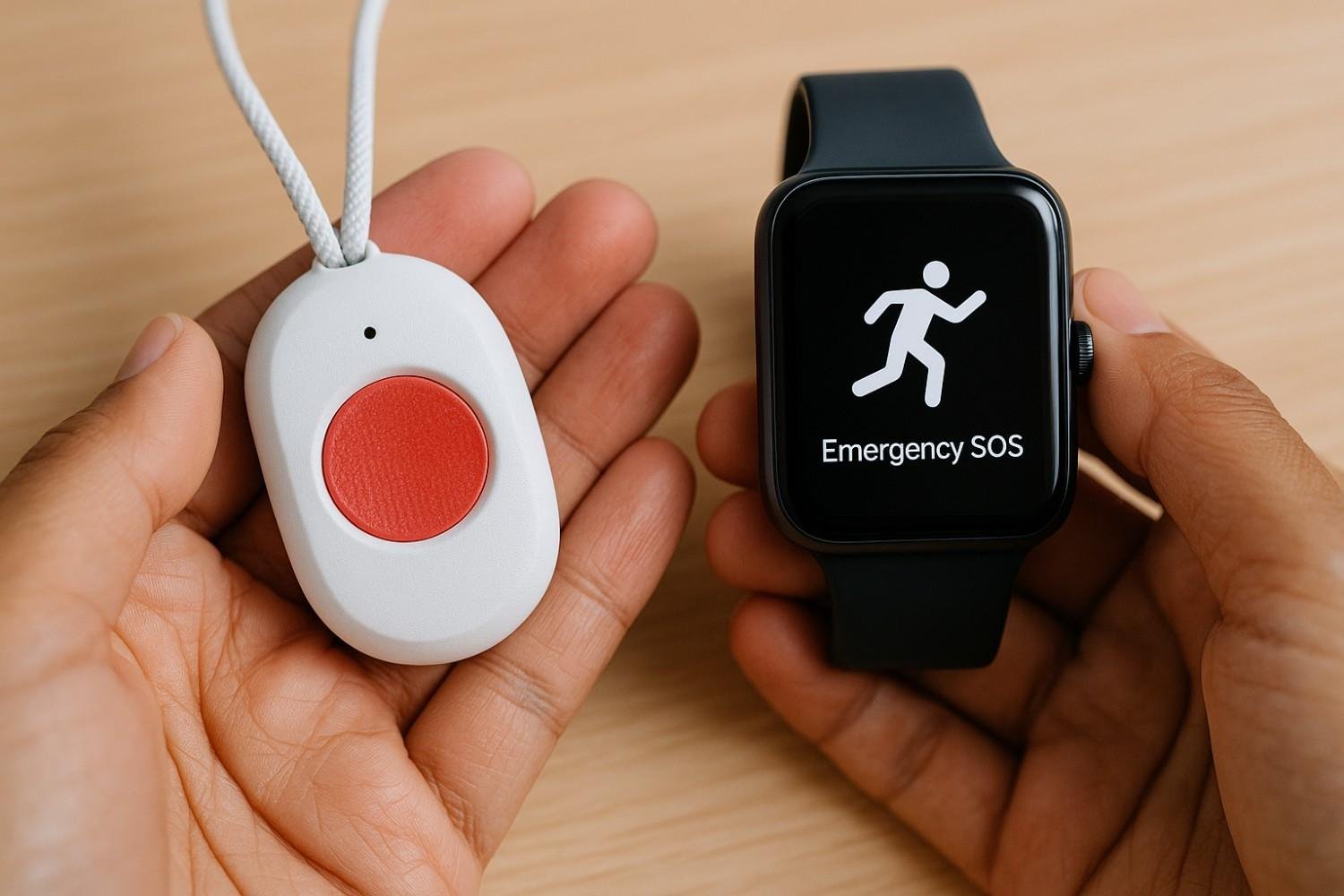
Falls aren’t just “part of getting older” anymore—they’re a major safety and independence issue. Fall detection devices are one of the simplest ways to make aging at home safer, especially when you or a loved one lives alone. In fact, national data shows that one in four adults 65 and older falls each year, and falls are the leading cause of injury in this age group.
This guide walks you through how fall detection devices work, the main types available, and what to look for so you can choose a device that truly fits your life and budget.
What are fall detection devices and why do they matter?
Fall detection devices are technologies that automatically sense a fall and trigger an alert—either to a 24/7 monitoring center, family member, or both—without needing the person to press a button.
They matter because many serious falls happen when:
- The person is unconscious or confused
- They’re too injured or panicked to press a help button
- They’re in a bathroom or bedroom where they might not be near a phone
Fast response after a fall can reduce complications, hospitalizations, and long-term loss of independence. Fall detection devices don’t prevent falls, but they dramatically shorten the time someone spends on the floor without help.
How do fall detection devices work?
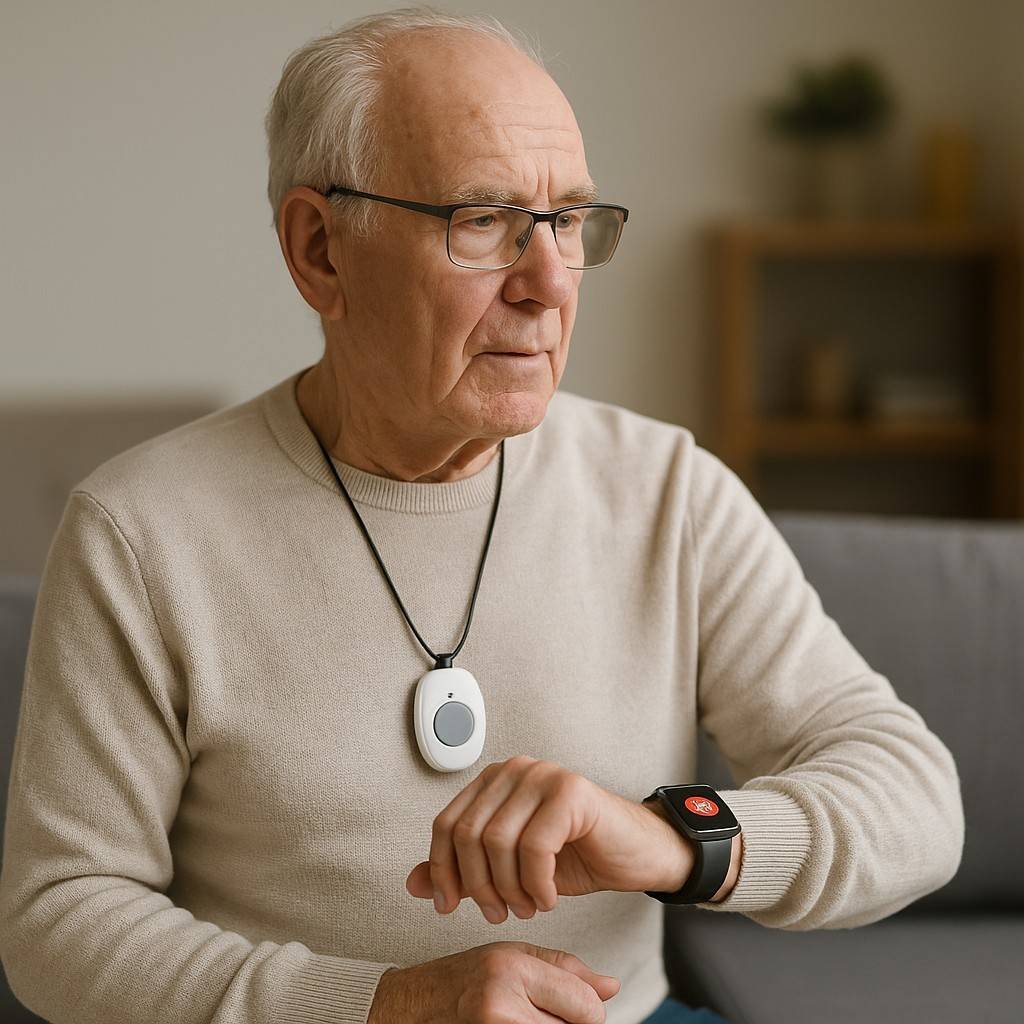
Most fall detection devices use motion sensors and smart algorithms to recognize when a fall has likely occurred.
Motion sensors and algorithms
Common technologies include:
- Accelerometers – measure changes in speed and movement across multiple directions.
- Gyroscopes – track rotation and orientation (such as going from upright to horizontal).
The device continuously analyzes movement patterns like:
- Sudden downward acceleration
- Impact with the ground
- A shift from standing to lying
- Little or no movement after impact
If those patterns match a fall signature, the device triggers an alert. Accuracy usually ranges from 80–95%, depending on sensor quality and algorithm training.
What happens after a fall is detected?
Depending on the device, the system may:
- Connect to a 24/7 monitoring center
- Send app notifications, texts, or calls to caregivers
- Provide GPS location data if the person is outside
Enrichment: Advanced Sensors, Smartwatches & Realistic Limitations
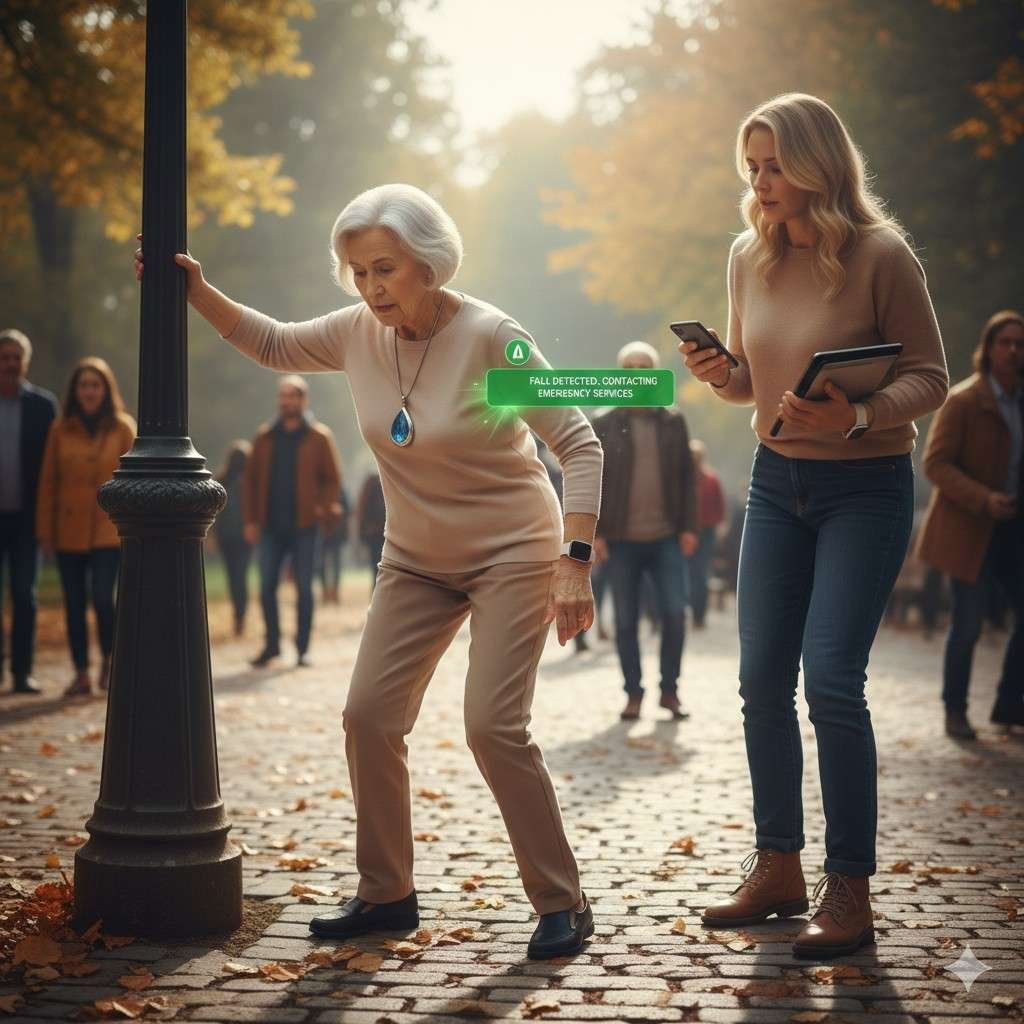
Many advanced fall detection devices now include barometric pressure sensors in addition to accelerometers and gyroscopes. These sensors detect subtle changes in elevation—such as a sudden drop from standing to the floor—helping reduce false alarms and improve detection accuracy. Smartwatches like the Apple Watch Series 4 and later and several Samsung Galaxy Watch models use combinations of these sensors to deliver reliable incident detection.
Still, even with multi-sensor systems, no device is perfect. “Low and slow” falls—like sliding from a chair or gradually lowering to the ground—may not always be detected because they lack the rapid downward movement most algorithms rely on. Understanding these nuances helps set realistic expectations when choosing the right fall detection solution.
What types of fall detection devices can you choose from?
1. Medical alert systems with automatic fall detection
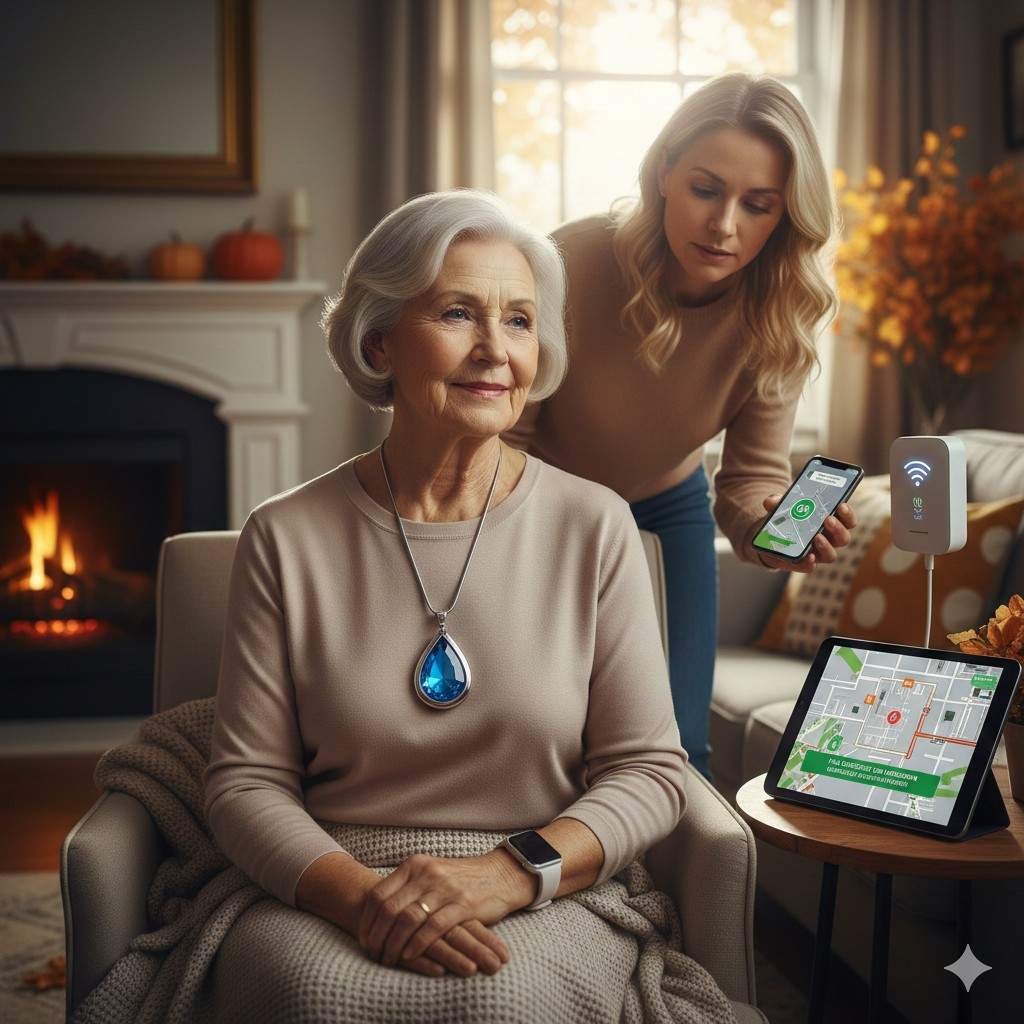
These are the classic home-based or mobile alert systems with optional fall detection.
They usually include:
- A base station
- A wearable pendant or wristband with a help button and sensors
Key features often include:
- Waterproof design for bathroom use
- Optional GPS for outdoor detection
- Long-range connectivity inside the home
- 24/7 professional monitoring
Monthly fees typically start around $20–$34, with fall detection add-ons costing about $10 extra.
2. Smartwatches with fall detection
Modern smartwatches increasingly include automatic fall detection. These devices can:
- Detect hard falls
- Prompt the wearer to confirm safety
- Automatically call emergency services
- Notify emergency contacts through the paired phone
Smartwatches are ideal for tech-savvy users who want all-in-one devices that combine health tracking, messaging, fitness features, and safety alerts.
3. Non-wearable in-home fall detection systems
Some advanced systems rely on radar, infrared, or radiofrequency sensors mounted on walls or ceilings.
These sensors:
- Monitor motion and body position
- Detect falls without requiring a wearable device
- Are especially useful for individuals with dementia or those who forget to wear pendants
Certain camera-based options use AI to analyze posture and movement, sending alerts immediately after detecting a fall. For privacy, many versions use non-visual sensors suitable for bathrooms and bedrooms.
How do you choose the best fall detection device?
Evaluate essential safety features
Look for:
- Proven detection accuracy
- Water resistance
- Long battery life
- GPS tracking if the user is active outside the home
- Reliable monitoring or alert methods
Compare costs and long-term value
Fall detection systems vary widely in price:
- Basic self-monitored devices: low one-time cost
- Monitored systems: monthly subscription fees, especially for 24/7 call center support
A higher monthly fee may be worth it for features like better accuracy, faster response times, and caregiver dashboards.
Match the device to the user’s lifestyle
- Active individuals → Mobile devices with GPS
- Homebound individuals → In-home base units or ceiling-mounted sensors
- Individuals with memory issues → Non-wearable systems
Comfort and ease of use matter. If a device isn’t worn consistently, it won’t provide the necessary protection.
Frequently Asked Questions
1. Are fall detection devices 100% accurate?
No. Even the best devices can miss certain falls or trigger false alarms. Most offer 80–95% accuracy depending on sensor quality, wear location, and the type of fall. Slow or gradual falls may not meet the required motion threshold.
2. Do you need a subscription for fall detection?
Many systems with 24/7 monitoring require a subscription. However, some self-monitored devices send alerts only to family or caregivers and do not require monthly fees.
3. Who benefits most from fall detection devices?
Fall detection is especially helpful for:
- Adults 65 and older
- Those with balance issues, mobility challenges, Parkinson’s, or previous falls
- Individuals living alone
- People who want added peace of mind while aging at home
4. Can fall detection systems prevent falls?
No. They cannot prevent falls—they only help ensure rapid response after a fall occurs. Prevention still depends on exercise, proper footwear, home safety modifications, and medical checkups.
Are fall detection devices worth it?
Given how common and serious falls are, fall detection devices offer a reliable safety net—especially for those living independently. With one in four older adults experiencing a fall each year, early detection and fast response can make a significant difference in recovery outcomes.
The best device is one that fits your lifestyle, budget, and comfort level. If possible, try a trial period or flexible plan to ensure the chosen device meets your needs in real-world use.
Sources
(Sources remain the same as previously provided, based on CDC, NCOA, Forbes Health, medical alert reviews, peer-reviewed research, and recognized testing organizations.)