
A few months ago, I was in the kitchen with my grandmother, who insisted I switch out the old non-stick frying pan for one of her trusted stainless steel skillets. “That old thing’s probably leaching chemicals into your food,” she said. I thought she was overreacting until I realized that, yes, even cooking utensils can pose health risks especially for seniors.
As we age, we become more sensitive to the materials around us, and the utensils we use for cooking are no exception. So, let’s dive into safe cooking utensils and why it’s time to make the switch for better health and easier cooking.
What Makes Cooking Utensils Safe for Seniors?
When it comes to cooking utensils, safety isn’t just about avoiding harmful chemicals. For seniors, it’s also about finding utensils that are easy to handle, won’t strain their hands, and won’t pose a risk of injury.
Safe cooking utensils for seniors should be lightweight, ergonomic, and made from materials that are gentle on the body and the cookware. Silicone, stainless steel, wood, and bamboo are top choices for safety, while plastics, nylon. Avoid damaged nonstick cookware due to health risks.
Why Are Non-Stick Cookware and Certain Metals Unsafe for Seniors?
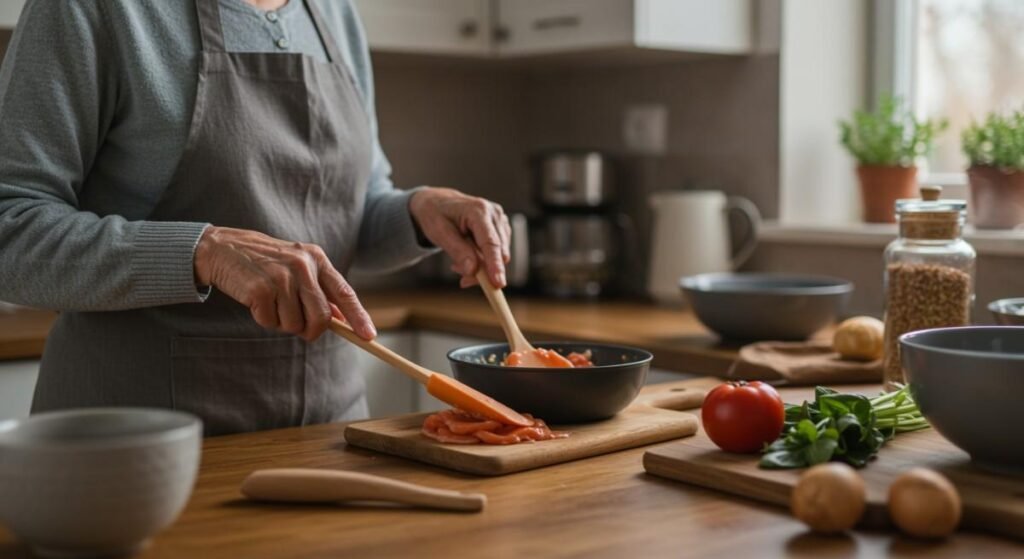
Non-stick cookware and utensils can seem like a quick and easy solution but they can be dangerous, especially as they age. Over time, the non-stick coating can degrade, releasing toxic chemicals like PTFE and PFOA, particularly when overheated. These chemicals can leach into food and the fumes can be harmful when inhaled. Additionally, non-stick coatings are easily scratched, especially when used with metal utensils, which could worsen the issue.
Similarly, metals like aluminum and unlined copper may leach harmful substances into food, especially when cooking acidic dishes. For seniors with sensitive health, these materials can cause unnecessary risks. Stainless steel, titanium, and high-quality ceramic are far safer alternatives, providing durability without the dangers of chemical exposure.
How to Choose the Right Cooking Utensils for Seniors
Choosing the best cooking utensils for seniors involves considering a few important factors. Here’s how to make the right choice for safety, ease of use, and health.
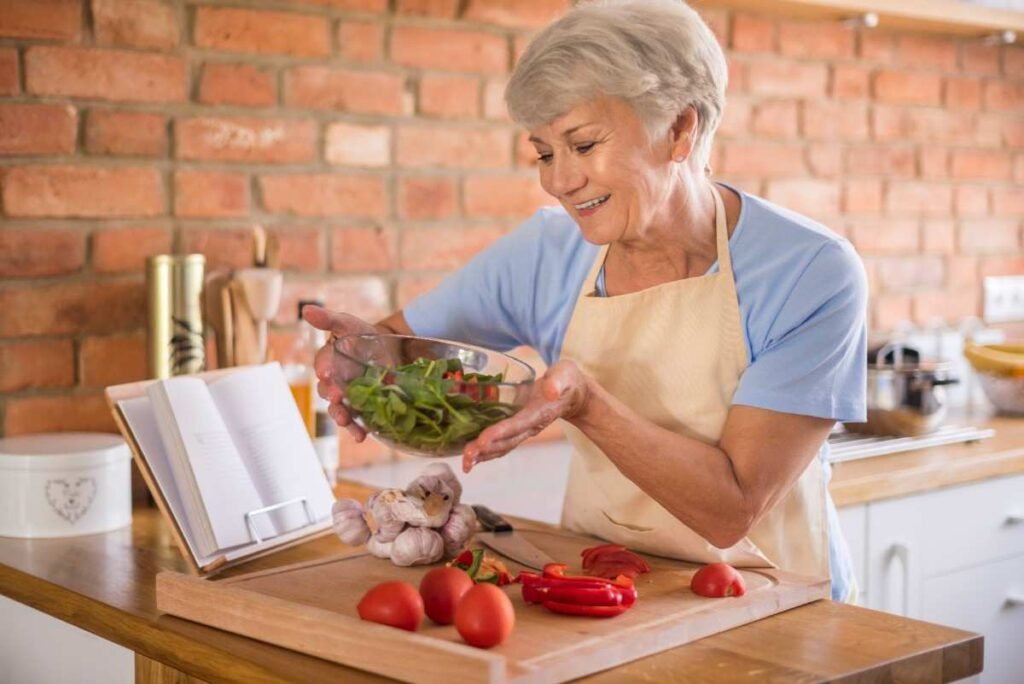
1. Focus on Comfort: For seniors, comfort is key. Utensils with ergonomic handles that are easy to grip can help reduce strain on the hands and wrists. Look for utensils made from lightweight materials like silicone, wood, or bamboo, which are easy to handle and won’t cause fatigue.
2. Go for Heat-Resistant Non-Toxic Materials: When choosing utensils, opt for food-grade silicone, stainless steel, or bamboo. These materials are safe for cooking, durable, and won’t leach harmful chemicals in your food. They are also heat-resistant, which makes them perfect for all types of cooking.
3. Avoid Sharp Edges: Many seniors have slower reflexes or weakened vision, so it’s important to avoid utensils with sharp edges that could lead to cuts or injury. Instead, go for utensils with rounded tips or flat surfaces that won’t cause harm.
4. Consider the Cookware: The utensils you choose should be compatible with your cookware. For example, avoid metal utensils with non-stick pans, as they can scratch and damage the surface. Silicone or wooden utensils are perfect for use with non-stick or ceramic cookware.
How to Safely Use Cooking Utensils for Seniors
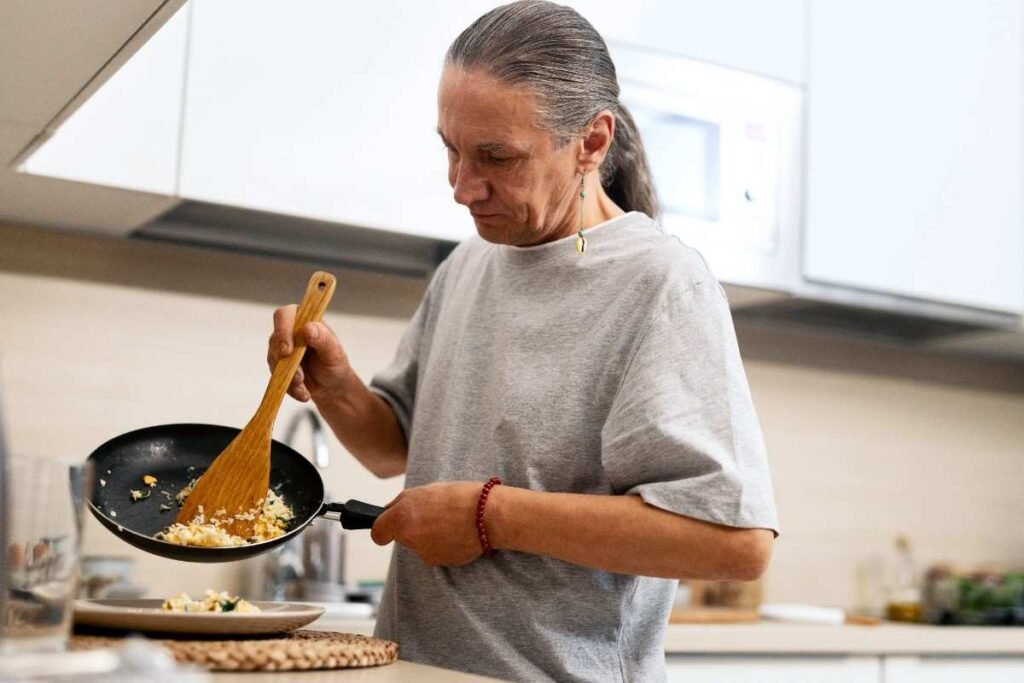
Using safe cooking utensils isn’t just about picking the right tools; it’s about using them safely and efficiently. Here’s how seniors can enjoy cooking without compromising their safety.
Start by organizing the kitchen with utensils that are easy to access. Keep the most-used tools within arm’s reach to avoid unnecessary stretching or bending. Using a sturdy step stool or chair can also help if the kitchen counters are too high.
When handling utensils, always ensure a firm grip. For those with arthritis or weak hands, look for utensils with soft, textured handles that provide a non-slip grip. If needed, use both hands to stabilize the utensil while stirring or flipping.
Seniors should also be mindful of posture and the kitchen environment. Try to work from a comfortable standing or sitting position to avoid any unnecessary strain. For added safety, seniors should take their time and not rush through meal prep. Slow movements can help prevent accidents.
Frequently Asked Questions
Q1. What are the best materials for cooking utensils for seniors?
The best materials for seniors are silicone, bamboo, wood, and stainless steel. Silicone is flexible, heat-resistant, and gentle on cookware. Bamboo and wood are lightweight, non-toxic, and gentle on non-stick surfaces. Stainless steel is durable and non-reactive, but should be used with non-stick cookware cautiously to avoid scratching.
Q2. Can non-stick cookware be safe for seniors?
Non-stick cookware can be safe if the coating is intact and not scratched. However, once the coating wears off, it can release harmful chemicals into food. For seniors, it’s best to switch to safer alternatives like stainless steel, ceramic, or high-quality cast iron that won’t pose any chemical risks.
Q3. Are plastic utensils safe for seniors?
Plastic utensils should be avoided, especially when exposed to high heat. Plastics can melt, warp, or leach chemicals like BPA and phthalates, which can be harmful over time. Opt for food-grade silicone, which is safer and more durable than plastic.
Q4. How can seniors ensure their utensils are safe to use?
Seniors should check that their utensils are made from food-safe materials, such as BPA-free silicone or stainless steel. It’s also important to regularly inspect utensils for any damage, such as scratches or cracks, which could compromise their safety. When in doubt, choose utensils that are labeled as “food-grade” or “platinum-cured.”
Cooking Doesn’t Have to Be Complicated (or Dangerous!)
Cooking should be an enjoyable and safe activity for seniors, and using the right utensils can make all the difference. By choosing safe cooking utensils made from materials like stainless steel, silicone, and bamboo, seniors can protect their health while enjoying their time in the kitchen. So, it’s time to upgrade those old, unsafe tools and embrace utensils that are not only practical but also non-toxic and easy to handle.
Remember, safety in the kitchen isn’t just about avoiding harmful materials; it’s also about making cooking more accessible and enjoyable. Now, go ahead and revamp your kitchen with safe cooking utensils. With the right tools, you’ll find cooking to be a lot more fun and a lot less stressful just the way it should be.