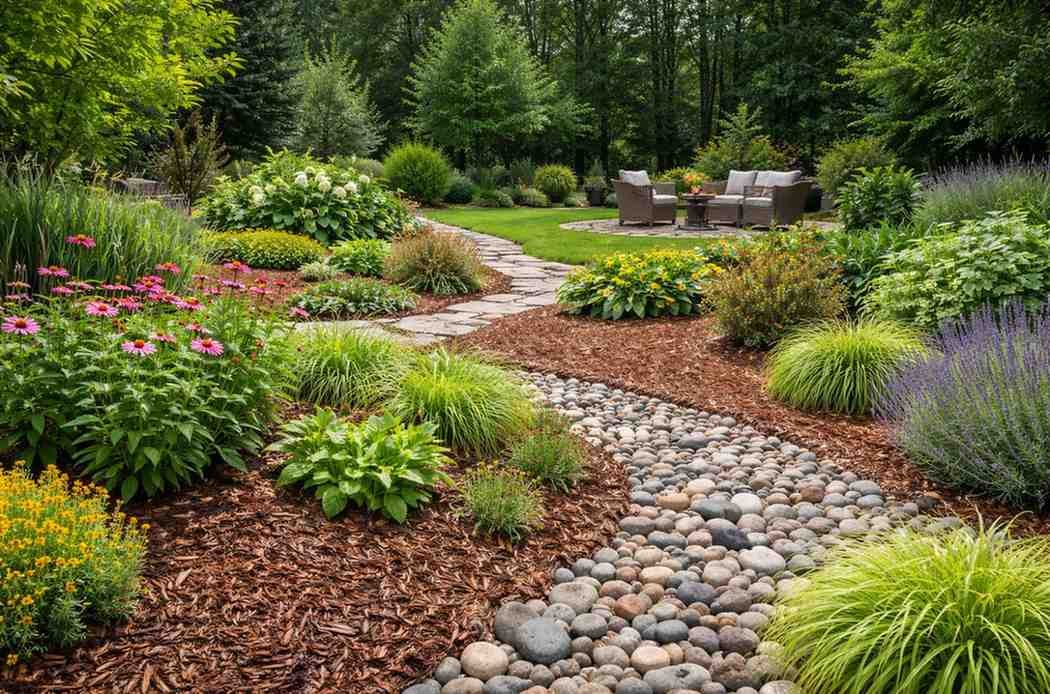
When we imagine a breathtaking garden or a serene backyard oasis, our minds often drift immediately to the vibrant flowers, the towering trees, or the lush green lawns. However, the true unsung hero of landscape design is often what lies beneath those plants: the ground covering.
The “floor” of your outdoor space plays a pivotal role not only in the visual cohesion of the landscape but also in the health and vitality of the ecosystem you are cultivating. Leaving soil bare is rarely found in nature; forests have leaf litter, and meadows have dense grasses. By mimicking this natural layering through rich natural coverings, you can transform a stark yard into a textured, thriving sanctuary.
Choosing the right ground covering is about balancing aesthetics with functionality. The material you choose will dictate how much moisture remains in the soil, how often you need to weed, and how the overall temperature of the plant roots is regulated. Whether you are aiming for a rustic woodland feel or a polished, modern look, there is a natural material suited for the task.
The Versatility of Organic Wood Mulch
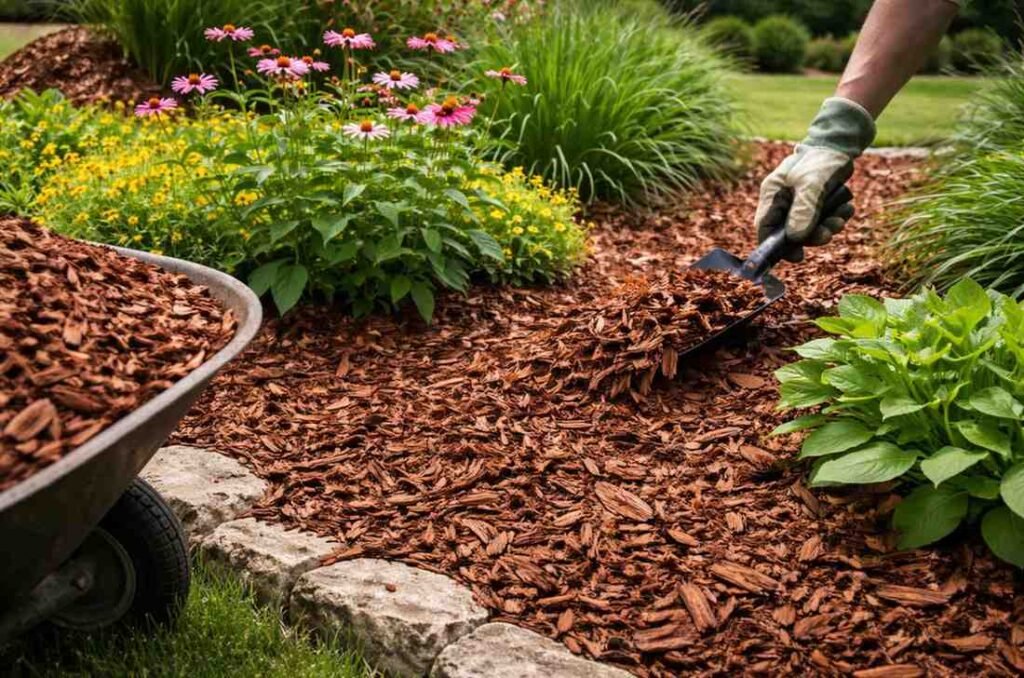
Wood mulch is perhaps the most popular choice for gardeners, and for good reason. It is the workhorse of the landscaping world. As shredded wood decomposes, it contributes valuable organic matter back into the soil, feeding earthworms and beneficial microbes that create a nutrient-rich environment for plant roots.
Aesthetically, wood mulch offers a uniform look that ties a garden bed together. It comes in various textures, from fine shreds to rougher chips, and a variety of colors. For example, selecting a dyed mulch can provide a striking color contrast that makes green foliage pop. For homeowners looking for a polished look, finding high-quality brown mulch in Salt Lake City can dramatically shift the aesthetic of a high-desert landscape, providing a deep, earthy contrast against green foliage while protecting the soil from the harsh sun.
Beyond looks, the functional benefits are immense. A two-to-three-inch layer of wood mulch can significantly reduce water evaporation, meaning you spend less time holding a hose and more time enjoying your patio. It also acts as an insulator, keeping soil cooler in the summer and warmer in the winter, which is crucial for perennial survival.
Bark Nuggets for Texture and Longevity
While similar to shredded mulch, bark nuggets offer a distinctly different vibe and set of benefits. Sourced typically from pine or fir trees, these larger chunks of bark are incredibly durable. Because they are larger and denser, they break down much slower than shredded wood, meaning you won’t have to replenish your beds as often.
Bark nuggets are excellent for adding coarse texture to a landscape. They work exceptionally well around trees and large shrubs where you want a “forest floor” appearance. From a practical standpoint, bark nuggets are less likely to compact than fine mulch, allowing water and air to permeate easily to the soil surface.
However, because they are lightweight, they can be prone to floating away in heavy rains, so they are best used in flat areas rather than on steep slopes where erosion might be a concern.
The Permanence of River Rock and Stone
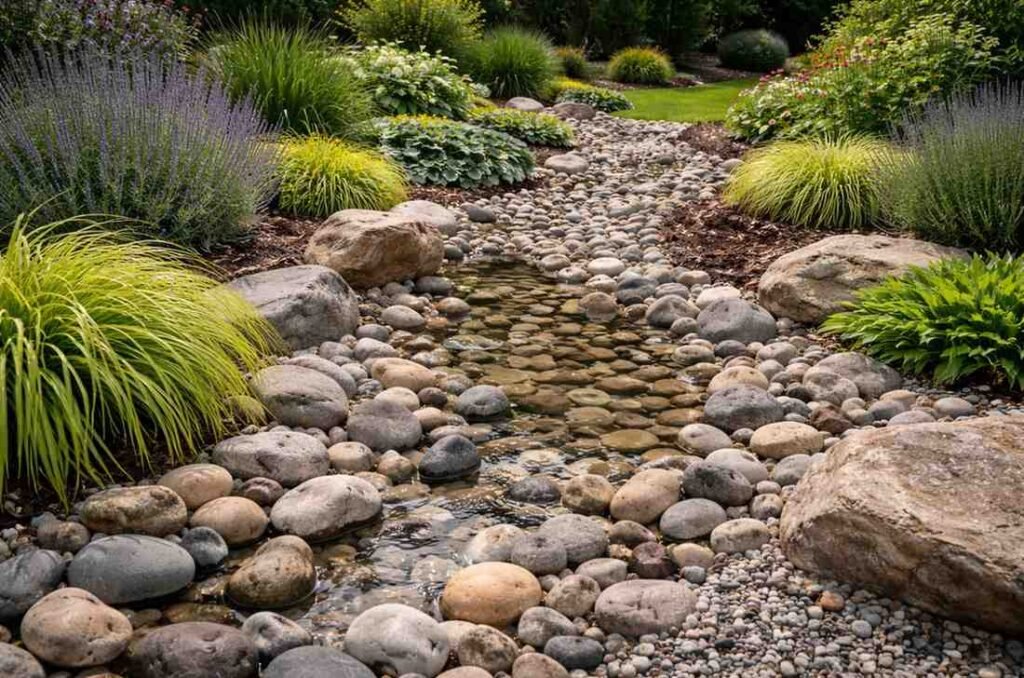
For a low-maintenance, modern aesthetic, many landscape designers turn to inorganic materials like river rock, pea gravel, or crushed stone. Unlike wood-based coverings, stone does not decompose. Once you lay it down, it is there for the long haul, making it a cost-effective solution over time despite a higher initial investment.
Stone is particularly effective in xeriscaping or drought-tolerant landscapes. It allows water to drain quickly and doesn’t harbor fungal diseases that can sometimes plague wood mulches. River rocks, with their smooth, rounded edges and varied colors, can create the illusion of a dry creek bed, adding a sense of movement and flow to the garden.
However, it is important to consider heat. Stones absorb solar radiation during the day and release it at night, creating a microclimate that can be hotter than the surrounding area. This is perfect for heat-loving plants like succulents or lavender, but requires careful planning for more delicate species.
Pine Straw for Acid-Loving Plants
In certain regions, pine straw (fallen pine needles) is an abundant and sustainable resource. It creates a soft, fluffy carpet that is distinctively rustic. Pine straw knits together, which helps it stay put on slopes even during heavy rain, making it an excellent choice for erosion control.
One of the specific chemical benefits of pine straw is its acidity. As it breaks down, it can slightly lower the pH of the soil. This makes it the ideal companion for acid-loving plants such as azaleas, rhododendrons, blueberries, and camellias. It is also incredibly lightweight and allows for excellent air circulation, preventing the soil from becoming soggy or waterlogged.
Living Ground Covers
Sometimes, the best cover is a living one. Planting low-growing, spreading plants—often referred to as “living mulch”—is a dynamic way to cover the soil. Plants like creeping thyme, sedum, vinca minor, or mondo grass can fill in the gaps between larger shrubs and trees.
Living ground covers provide a habitat for pollinators and beneficial insects. Their root systems help hold the soil in place, preventing erosion more effectively than almost any loose material. While they require more initial effort to establish than spreading a bag of bark, once established, a dense mat of ground cover suppresses weeds effectively and creates a lush, green carpet that cools the ambient air temperature.
Transforming your outdoor space with rich natural coverings is an investment in both beauty and biology. By carefully selecting materials—whether it is the nutrient-boosting power of organic mulch, the enduring texture of stone, or the functional support of pine straw—you create a landscape that is resilient and visually stunning. The “floor” of your garden sets the stage for everything that grows within it, grounding your design in nature’s own textures.