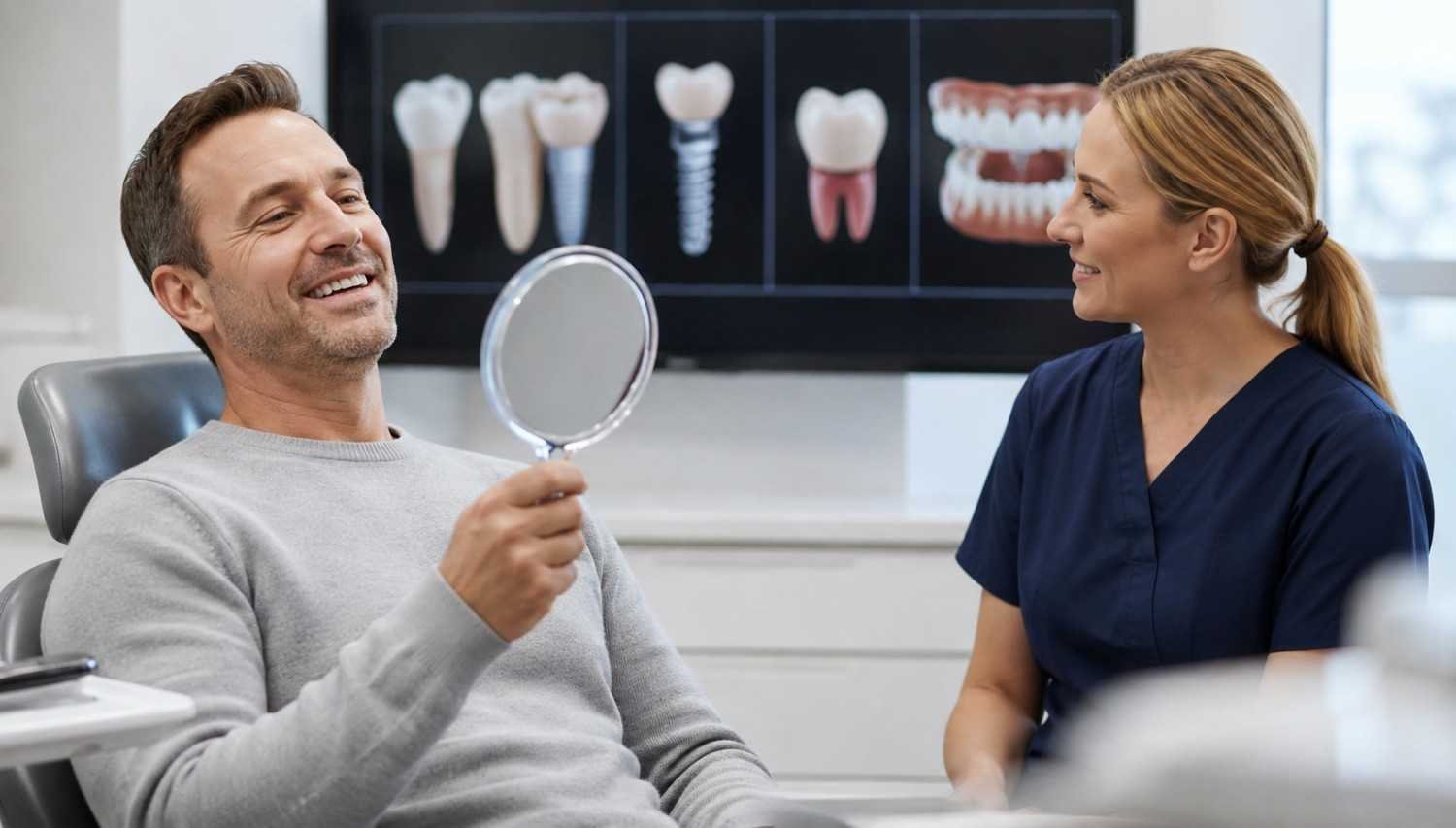
Cracked or missing teeth were once an unfortunate thing that everyone accepted as normal. Times have changed now. With contemporary restorative dentistry, the results are indistinguishable from natural teeth in appearance and function. There are devices such as 3D scanning using CAD/CAM technology and guided surgical implant placement. The impact they make on dentistry has changed greatly. Restoring teeth not only improves the aesthetics but also prevents jaw bone loss, improves a person’s bite, and prevents further displacement of the surrounding teeth. Whether it is one or many teeth, knowing your options will allow you to choose something durable and within your budget range. If you have tooth pain or problems when you bite, talking to an experienced dentist falls church va will help you find the right plan for your needs.
1. What Are Dental Implants and How Do They Work?
A dental implant is a root replacement — it is a titanium or zirconia post with a custom crown placed on top. The implant joins with the jawbone by a process called osseointegration. This is what makes the implant stable. You can use it to replace one tooth, several teeth with a bridge, or all your teeth with All-on-4.
Lifespan: 15 to over 25 years. With good care, they can be with you for all their years.
An implant helps your jaw stay strong because it passes the normal chewing forces into the jawbone. This can stop bone loss that can happen if there are gaps that are not treated.
2. When Should You Get a Custom Dental Crown?
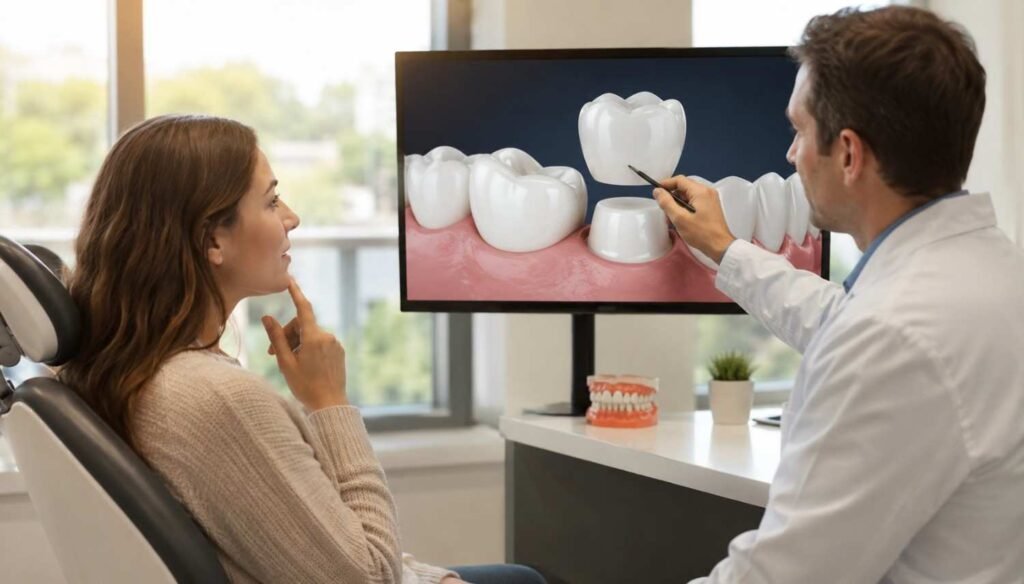
A crown is a type of cap that a dentist can place on the uppermost portion of your tooth. Your dentist may use this to help a tooth that is chipped, cracked, or heavily decayed. The crown will cover all the parts of your tooth that protrude from the gums. Modern crowns have a very realistic appearance since they are created from tooth-like material such as zirconia or E-max.
Lifespan:15+ years.
3. How Do Fixed Dental Bridges Replace Missing Teeth?
Fixed bridges are installed where you have one or several adjacent missing teeth. A false tooth will be held in position by attaching it to two crowned teeth, which will serve as support. The crowned teeth act as the abutment for the bridge. Some bridges have standard crowns while other bridges have resin-bonded Maryland bridges which require less tooth reduction.
Lifespan: 7–15 years.
4. Is Composite Dental Bonding Right for Minor Tooth Damage?
Bonding composite involves the application of Bis-GMA, which is a white resin, directly to the enamel. The procedure aims at correcting minor chipping, cracks, spaces, and discolored areas in the teeth. The procedure is done manually and involves the use of a special light to harden the composite.
Lifespan: 5–10 years.
Clinical Advantage: This is one of the most basic forms of dental work. Little or no enamel has to be taken off.
5. What Are Inlays and Onlays in Restorative Dentistry?
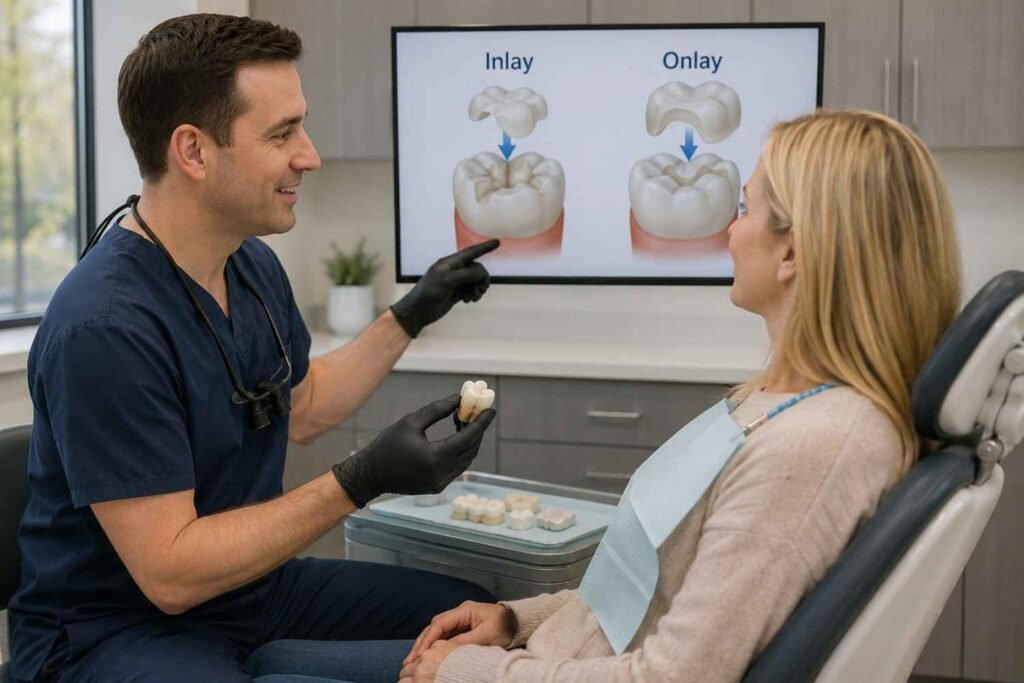
Inlays and onlays are called partial crowns, and they are made using porcelain or ceramic. An inlay fits inside the grooves of a tooth that is hurt. An onlay covers one or more of the pointed parts on top of the tooth.
Lifespan: 10–15 years.
Clinical Advantage: This keeps much more of your own tooth safe than a full crown. At the same time, it stays stronger over time than a big filling.
6. Why Choose Modern Composite and Ceramic Fillings?
Composite resin and ceramic fillings can be applied to small and moderately sized cavities. They adhere to the teeth directly. Now, most people choose these over older silver fillings. There is no metal, and they go along with the tooth when it gets hot or cold. Maintaining these restorations also depends on the role of saliva in maintaining oral health, as saliva helps protect teeth, neutralize acids, and support the long-term durability of dental work.
Lifespan: 7–12 years.
Clinical Advantage: The dentist does not have to take out as much healthy tooth when getting the spot ready. There is also no staining from metal you need to think about.
7. How Have Modern Dentures Improved for Full or Partial Tooth Loss?
Now, full or partial dentures are made from lightweight and flexible plastics or acrylic materials. This gives them a soft feel and helps them fit better. You can get the type you can take out, or you can get snap-on overdentures that stay in place by attaching to implants. These don’t slip or cause problems with your speech like old dentures did.
Clinical Benefit: A way that does not cost much to fix the whole mouth. It helps put the face back to normal and lets you chew without pain.
Comparison of Restorative Dental Solutions
|
Solution Name |
Best Used For | Lifespan | Cost Range | Invasiveness |
| Dental Implants | Single/multiple missing teeth | 15–25+ Years | $$$$ |
Surgical |
|
Dental Crowns |
Severely broken or decayed teeth | 10–15 Years | $$$ | Moderate |
| Fixed Bridges | 1 to 3 consecutive missing teeth | 7–15 Years | $$$ |
Moderate |
|
Inlays / Onlays |
Moderate damage beyond a filling | 10–15 Years | $$–$$$ | Mild–Moderate |
| Composite Bonding | Minor chips, small gaps, stains | 5–10 Years | $ |
Non-Invasive |
|
Composite Fillings |
Mild to moderate decay/cavities | 7–12 Years | $ | Non-Invasive |
| Modern Dentures | Multiple teeth or full arch loss | 5–10 Years | $$–$$$ |
Non-Invasive to Mild |
Which Dental Solution Is Right for You?
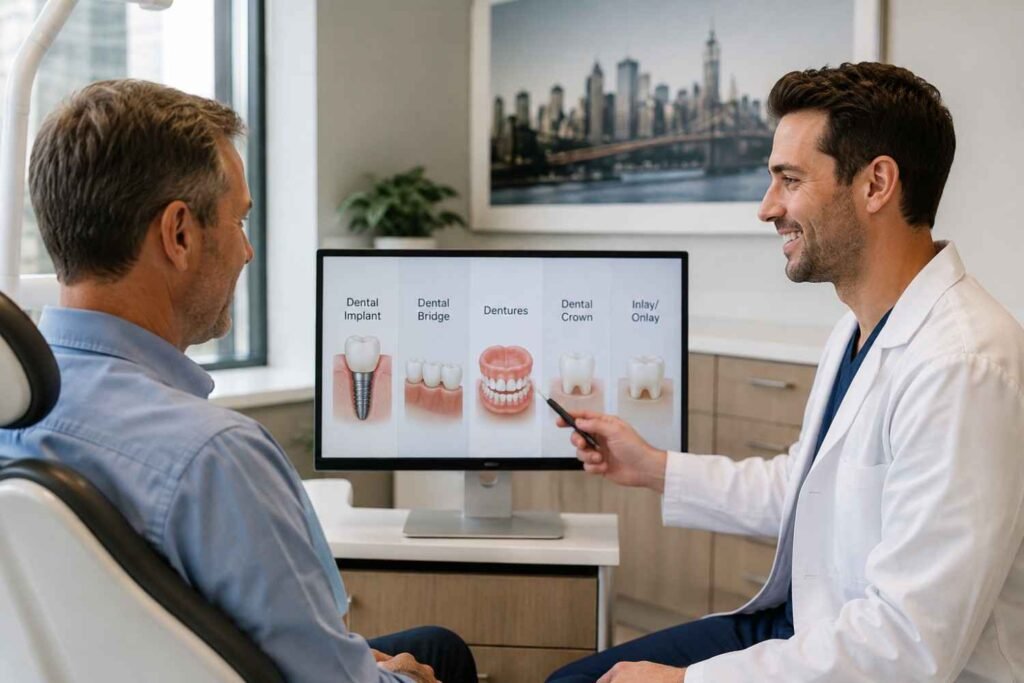
A few things worth weighing with your dentist:
Amount of damage. If there are just some chips in the upper layer, then the treatment can be as simple as filling or even just bonding. However, if more than half of the tooth is gone, then your dentist will have to apply a crown or an onlay.
Bone density. Implants need to have enough jawbone height and width to work. If there is a lot of bone loss, you may want to choose a bridge or an implant-assisted overdenture with grafting instead.
Longevity vs Budget. Though the upfront cost of implants will be higher, in the long run it will prove to be cost-effective. This is because implants need not be replaced as often as dentures and conventional bridges.
Conclusion
Fixing missing or damaged teeth does more than help your smile. It can also protect your long-term health and keep your bite working well. There are several options to do this. These include composite bonding, zirconia crowns, and dental implants. Newer materials make tooth repair feel and look more real. These can last for a long time, too. If you want to know more about your options, you can start with a consultation with a trusted dentist falls church va.