If you’re exploring stretching exercises for seniors, you’re likely interested in simple ways to improve flexibility, reduce stiffness, and move with more comfort throughout the day. Stretching is one of the easiest, most accessible habits seniors can adopt to support better mobility, posture, and overall well-being.
These exercises don’t require equipment, and many can be done seated, standing, or with support from a chair or wall. With just a few minutes a day, stretching can make daily activities—reaching overhead, turning your head, or walking—feel smoother and more controlled.
Why Are Stretching Exercises for Seniors So Important?
As people age, muscles naturally tighten, and joints lose some of their range of motion. Tasks that once felt effortless, like bending or twisting, may require more effort. Gentle stretching helps counter these changes by improving flexibility, supporting balance, and relieving everyday tension.
A quick warm-up is important before stretching. Even walking in place for five minutes increases blood flow and makes each movement safer and more comfortable. And it’s essential to avoid pushing through pain. Stretching should feel like a mild pull—not sharp, pinching, or uncomfortable.
Anyone with balance concerns, chronic conditions, recent surgeries, or joint issues should check with a doctor or physical therapist before beginning a new routine.
What Are the Best Stretching Exercises for Seniors?
Below are senior-friendly stretches that target major muscle groups. You can choose the ones that feel best and build a routine at your own pace.
Neck Stretches for Better Mobility
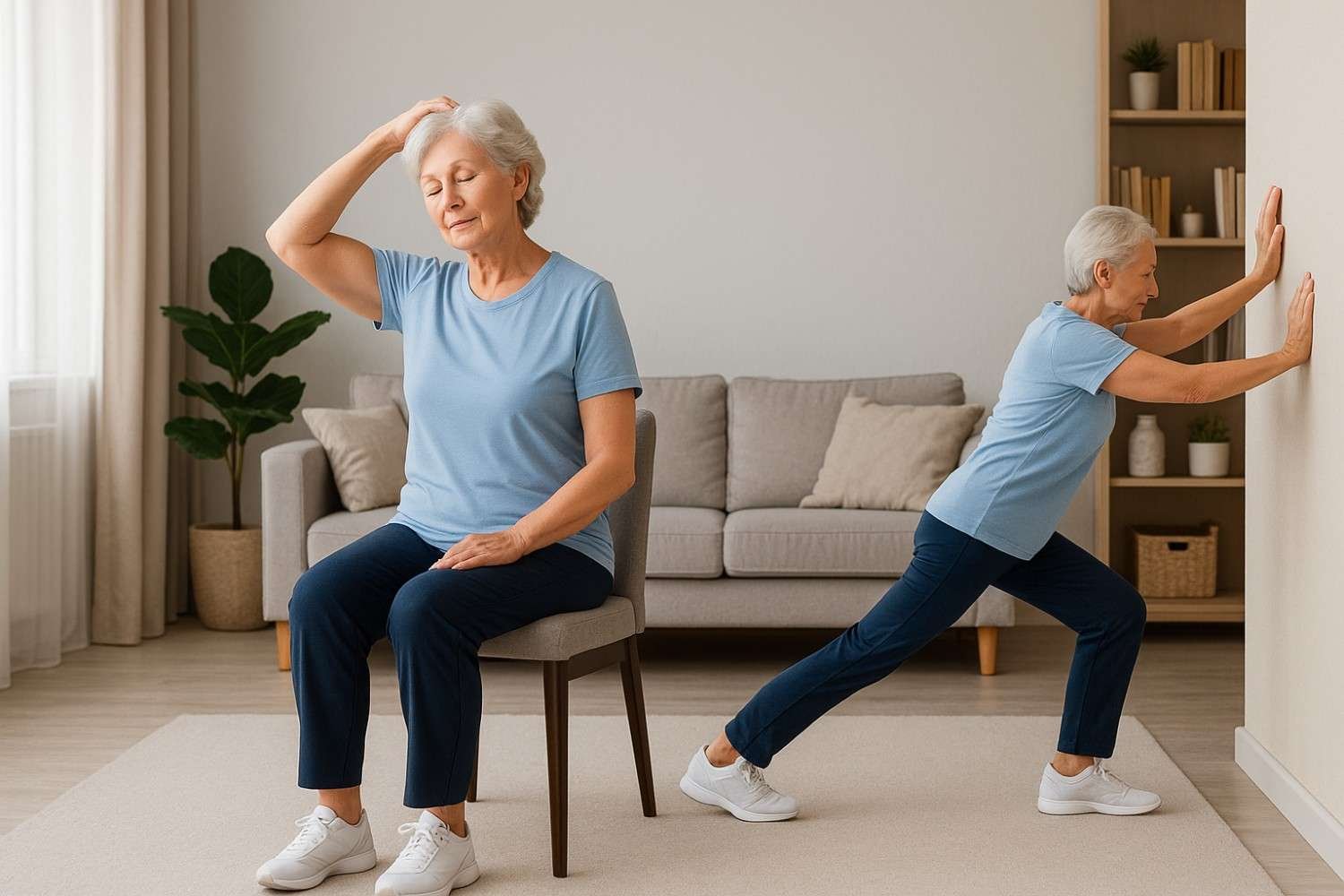
Tilt your head gently toward your shoulder until you feel a stretch along the opposite side of your neck. Hold, then switch sides.
You can also turn your head slowly to look over each shoulder to improve rotational mobility.
Shoulder Stretches to Ease Upper-Body Tension
Cross-Body Shoulder Stretch:
Bring your right arm across your chest and use your left hand to guide it closer. Hold for 10–30 seconds, then switch sides.
Shoulder Rolls:
Lift your shoulders up, roll them back, and then down. Reverse the direction. This helps ease tension from sitting or device use.
Overhead Side Stretch for the Ribcage and Core
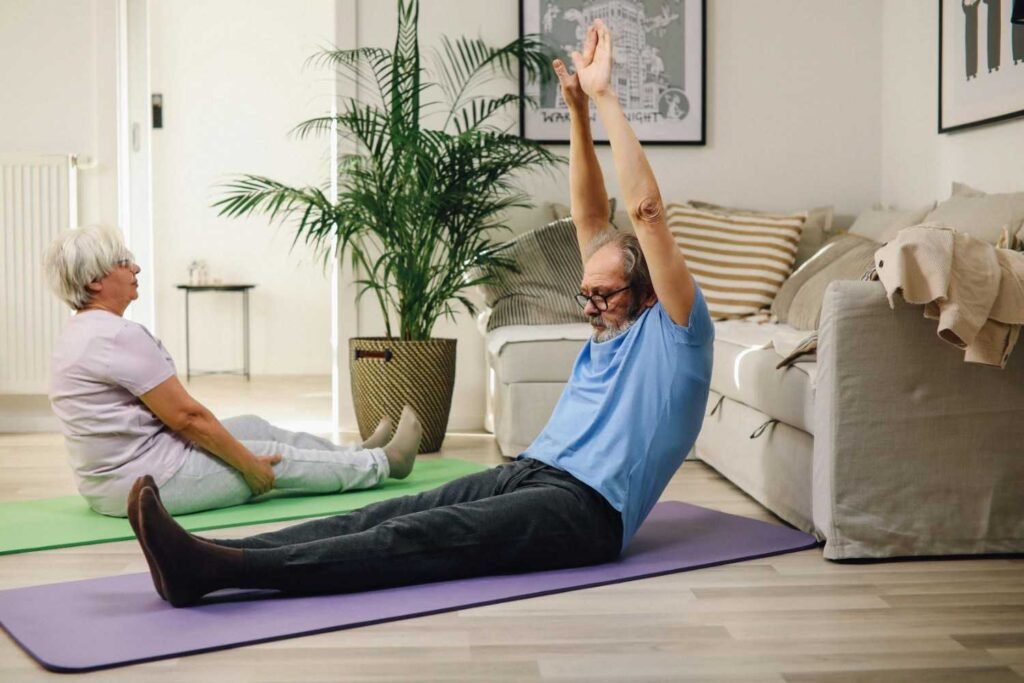
Sit or stand tall. Raise both arms overhead, then gently lean to one side without twisting. Repeat on the other side. This movement opens the ribcage and supports better posture.
Chest Stretch for Better Alignment
Clasp your hands behind your back and gently lift your arms away from your tailbone. If clasping is difficult, hold a towel or use a chair back for support.
A wall variation—placing the forearm on the wall and turning the body outward—also works well to open tight chest muscles.
Hamstring Stretch for Leg Flexibility
Sit at the edge of a sturdy chair. Extend one leg straight with the heel on the floor and toes pointing upward.
Keeping your spine tall, hinge forward from the hips until you feel the stretch along the back of your thigh. Switch sides.
Calf Stretch for Comfortable Walking
Stand facing a wall with your hands placed on it. Step one leg back, keeping the heel flat and the leg straight.
Lean forward slightly until you feel the stretch in your calf. Hold, then switch sides.
Hip Flexor Stretch for the Front of the Hips
Kneeling version:
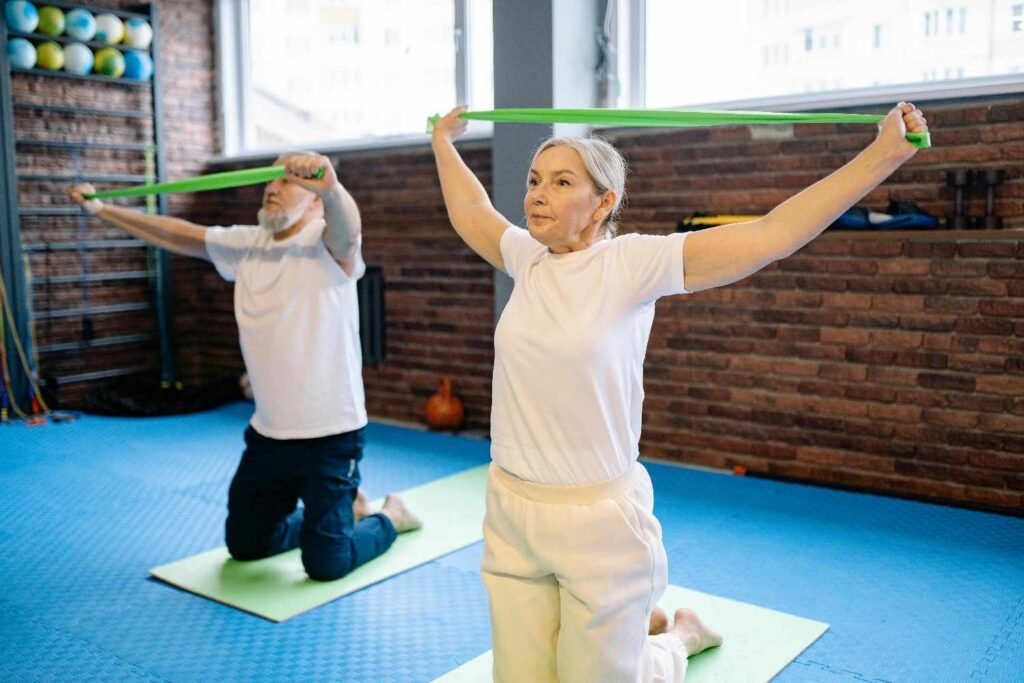
Kneel on one knee with the opposite foot planted forward. Gently shift your hips forward to stretch the front of the hip on the kneeling side.
Standing modification:
Hold onto a wall or chair. Step one foot back, keep your torso tall, and lean forward gently. This provides a similar stretch without kneeling.
Cat-Cow Stretch for Spine Mobility (Floor or Seated)
On the floor:
Start on all fours. Slowly round your back upward (cat), then arch your back while lifting your chest (cow). Move smoothly between the two motions.
Seated option:
Sit tall. Round your spine forward, then lift your chest and gently arch your back. This helps reduce stiffness and improve spinal movement.
Knee-to-Chest Stretch for Lower-Back Relief
Floor version:
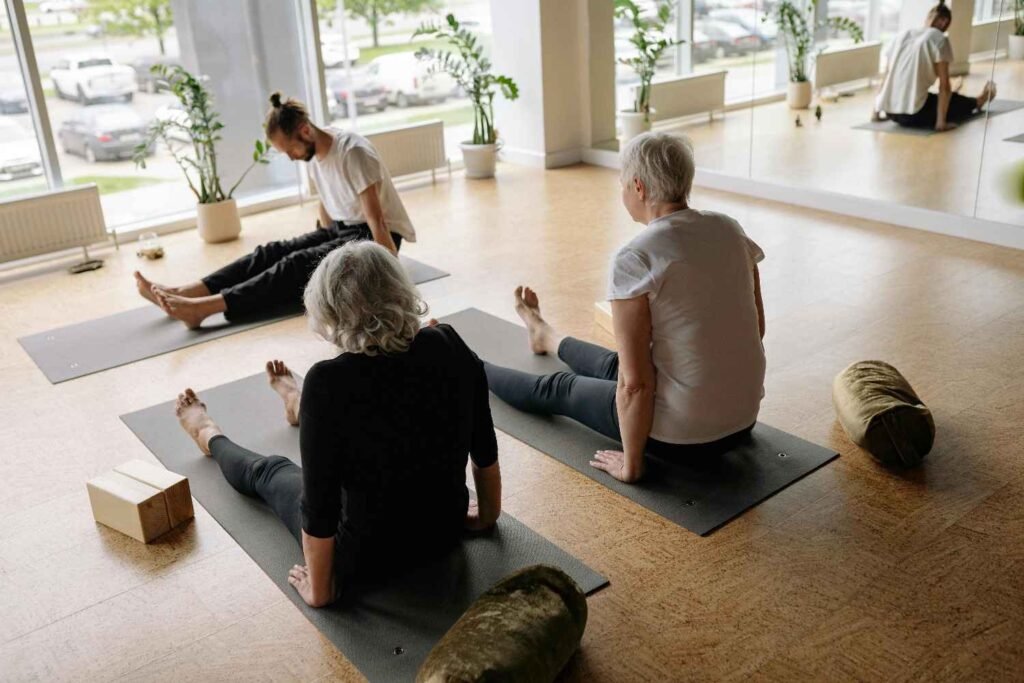
Lie on your back. Bring one knee toward your chest, holding it gently with your hands. Switch legs.
Seated version:
Sit tall. Lift one knee toward your chest using your hands for support. Repeat on the other side.
This stretch releases tension in the hips and lower back.
How Often Should Seniors Stretch?
Stretching two to three times per week is a great starting point, but many seniors enjoy stretching daily because it helps them feel more limber. Even five to ten minutes can make a noticeable difference. Consistency is more important than intensity—gentle, regular practice creates the best results.
Frequently Asked Questions
1. Is stretching helpful for seniors with arthritis?
Yes—gentle stretching can help reduce joint stiffness and improve mobility. Movements should stay within a comfortable range, and sharp pain should always be avoided. Anyone with moderate to severe arthritis should consult a healthcare provider for personalized guidance.
2. Can stretching help with balance?
Stretching alone won’t prevent falls, but it improves posture, flexibility, and body awareness, all of which support better balance. For maximum benefit, combine stretching with strength and balance training.
3. What if I can’t get on the floor?
Many stretches—including neck, chest, shoulder, and hamstring movements—can be done seated. A sturdy chair or wall offers excellent support for seniors who prefer not to kneel or lie down.
4. How long should each stretch be held?
A typical hold time is 10–30 seconds. Repeat each stretch two to three times and breathe normally throughout. The goal is gentle mobility, not forceful stretching.
Stretching Exercises for Seniors Can Make Movement Feel Easier
Incorporating stretching exercises for seniors into a daily or weekly routine can make everyday activities feel more comfortable and controllable. Whether you’re stretching from a chair, using a wall for support, or following floor-based versions, these simple movements can help maintain mobility, ease stiffness, and support long-term independence.
Disclaimer:
This article is for informational purposes only and is not medical advice. Always consult a healthcare provider before beginning or modifying any exercise or stretching routine, especially if you have chronic conditions, recent injuries, or balance concerns.